Melanocytic Lesion Diagnosis Working Group
Working Group Charter
Clinical Utility of Genome Wide Copy Number Analysis for Melanocytic Lesion Diagnosis: A Consensus Statement from the Cancer Genomics Consortium
Work Product CategoryManuscriptor Publication: Statement of Clinical Utility/Review of genetic/genomic abnormalities and their clinical significance
Overview
Cutaneous melanocytic lesions are relatively common and may range from benign to highly aggressive. Although the diagnosis is often straightforward histologically, challenging cases provide a dilemma with critical clinical and prognostic implications. Copy number variant (CNV) analysis via comparative genomic hybridization (CGH) is emerging as a valuable tool to aid dermatopathologists in diagnosis of histologically ambiguous lesions. Appropriate use criteria, developed by the American Society of Dermatopathology, classifies CGH as “usually appropriate” as an ancillary tool to diagnose melanoma in both pediatric and adult cases of uncertain malignancy by histopathologic assessment. Diagnostic challenges may be seen in cases where malignant melanoma is arising in a background benign nevus, has nevoid histologic features, or has Spitzoid morphology with atypia. Studies have shown that lesions harboring multiple CNVs correlate with malignancy and benign lesions harbor no CNVs, with few exceptions. Melanoma is a variable malignancy at the clinical, histologic and molecular level and current CNV studies are uncovering its complexity. MicroarrayCGH testing for melanocytic lesions is performed in a limited number of laboratories on various array platforms and dermatopathologists are just beginning to learn how these results can help support a definitive diagnosis. We propose to perform an extensive review of published CNVs in melanocytic lesions with an aim in evaluating the clinical significance and diagnostic utility of microarray.
Working Group Members

Anwar Iqbal
University of Rochester Medical Center
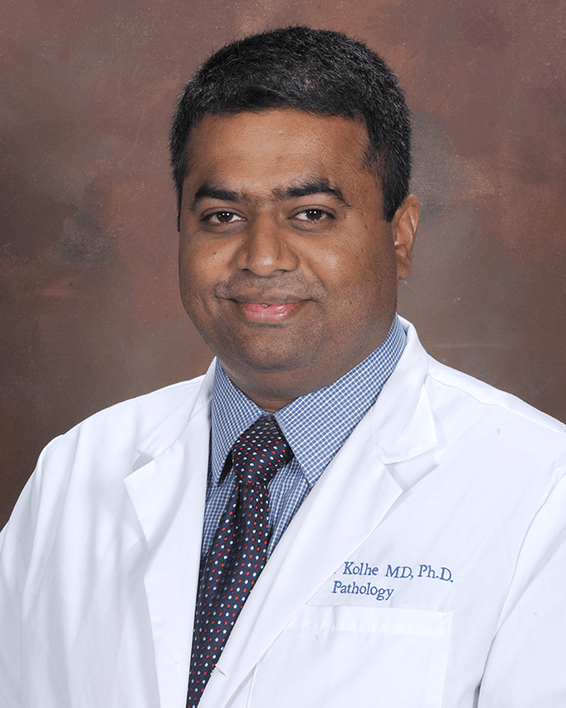
Ravindra Kolhe
Georgia Esoteric Molecular Laboratory, Augusta University
Ahmed Khalid Alomari
Indiana University School of Medicine
Umut Aypar
Memorial Sloan Kettering Cancer Center
Alka Chaubey
Bionano Genomics
Kristen Deak
Duke University Health System Clinical Labs
Katherine Geiersbach
Mayo Clinic
Shivani Golem
University of Kansas Medical Center
Cynthia Reyes Barron
Pathology Professional Services
Nikhil Sahajpal
Georgia Esoteric Molecular Laboratory, Augusta University
Lei Wei
Roswell Park Comprehensive Cancer Center
Eli S. Williams
University of Virginia School of Medicine
Ying Zou
Johns Hopkins University School of Medicine
Anwar Iqbal
University of Rochester Medical Center